
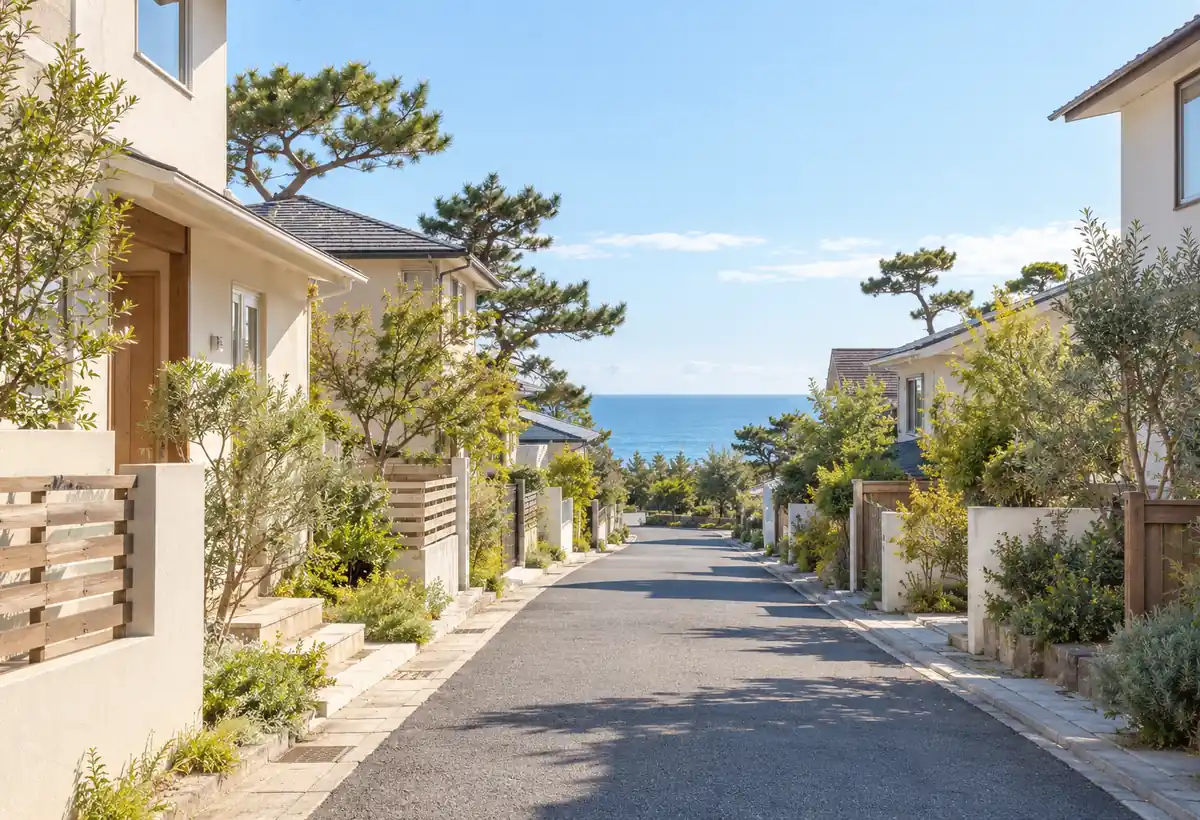
Fujisawa, in the Shonan area of Kanagawa, is another municipality where Social Welfare Corporation Shinkou Fukushikai (社会福祉法人 伸こう福祉会) has welfare-sector operations under the Cross Heart name. JCC uses that Kanagawa background, and in-person support is available here as anywhere in Japan.
As everywhere in Japan, care runs on the national long-term care insurance system. The local difference in Fujisawa is the front door, and it is genuinely distinct. The city does not use the usual generic name. Its community comprehensive support centers (地域包括支援センター) are branded ikiiki support centers (いきいきサポートセンター).
If you search for the standard term you may miss them, so this is worth knowing before you start. The city runs 19 of these across a base of 13 districts.
The higher-population areas of Kugenuma, Tsujido and Fujisawa each have two. Branch offices cover the Zengyo, Rokue and Shonan-Oba districts. As in other cities, the center that handles your case is determined by your parent's home district.
Each center is staffed by a team that typically includes a senior care manager (主任ケアマネジャー), a certified social worker (社会福祉士) and a public health nurse (保健師). That mix is the point of these centers. A medical-leaning question, a benefits question and a care-coordination question can all be handled by the same office.
For most families the path is a call to the assigned ikiiki support center, an assessment and then a care-needs certification (要介護認定) to start services.
For a foreign family, the obstacle is the same as elsewhere in Kanagawa. The centers operate in Japanese, and the local naming alone can be confusing. Kanagawa Prefecture runs a foreign-resident consultation service in many languages including English for general orientation. It does not do care planning, and it will not know which of Fujisawa's centers covers your parent's street.
That is where JCC helps. We identify the correct ikiiki support center for your parent's Fujisawa address, prepare you for the assessment and translate what the team proposes and what it costs. If your parent lives in Fujisawa and you are overseas, the process can start online. In-person attendance is scheduled once the scope is agreed.
Getting medical care
To find a clinic or hospital that can see your parent in English or another language, start with Medical Information Net, nicknamed Navii (医療情報ネット ナビイ), run by the Ministry of Health, Labour and Welfare. In April 2024 it replaced the separate search systems each prefecture used to run, so every prefecture's medical institutions are now searched there. The site has an English interface, and its detailed search can filter by foreign-language support. Language details are reported by each institution, so phone ahead to confirm.
The Japan National Tourism Organization (JNTO) keeps an English page called "Guide for when you are feeling ill". Its medical institution search filters by prefecture, language and department, and the page explains how a visit to a Japanese hospital works. It is written for visitors, but the steps are the same for a parent who lives here.
Kanagawa is covered by #7119. The prefecture runs the Kanagawa emergency consultation center (かながわ救急相談センター) across the whole prefecture, 24 hours a day, every day. A nurse helps decide whether to call an ambulance or see a doctor now, and staff can name a medical institution that is open. Telephone interpretation covers 14 languages, including English, Chinese, Korean, Portuguese, Spanish and Vietnamese.
From a landline with a 042 area code, #7119 connects to Tokyo instead, so dial 045-232-7119 or 045-523-7119. If the situation is clearly an emergency, call 119.
- Medical Information Net (Navii), Ministry of Health, Labour and Welfare
- Guide for when you are feeling ill (JNTO)
- Kanagawa emergency consultation center #7119 (Kanagawa Prefecture)
- Where #7119 is available (Fire and Disaster Management Agency)
Related guidance
- What community support centers do
- Long-term care insurance basics
- What elderly care costs
- Care navigation service
- Facility search support
Official local references
Local specifics on this page are drawn from official sources:
- Fujisawa ikiiki support centers (city of Fujisawa)
- Kanagawa foreign-resident consultation service (Kanagawa Prefecture)
- Our group: Shinkou Fukushikai / Cross Heart
See all areas we cover. Local details vary by ward and change over time; our editorial policy explains how we source and correct content.