
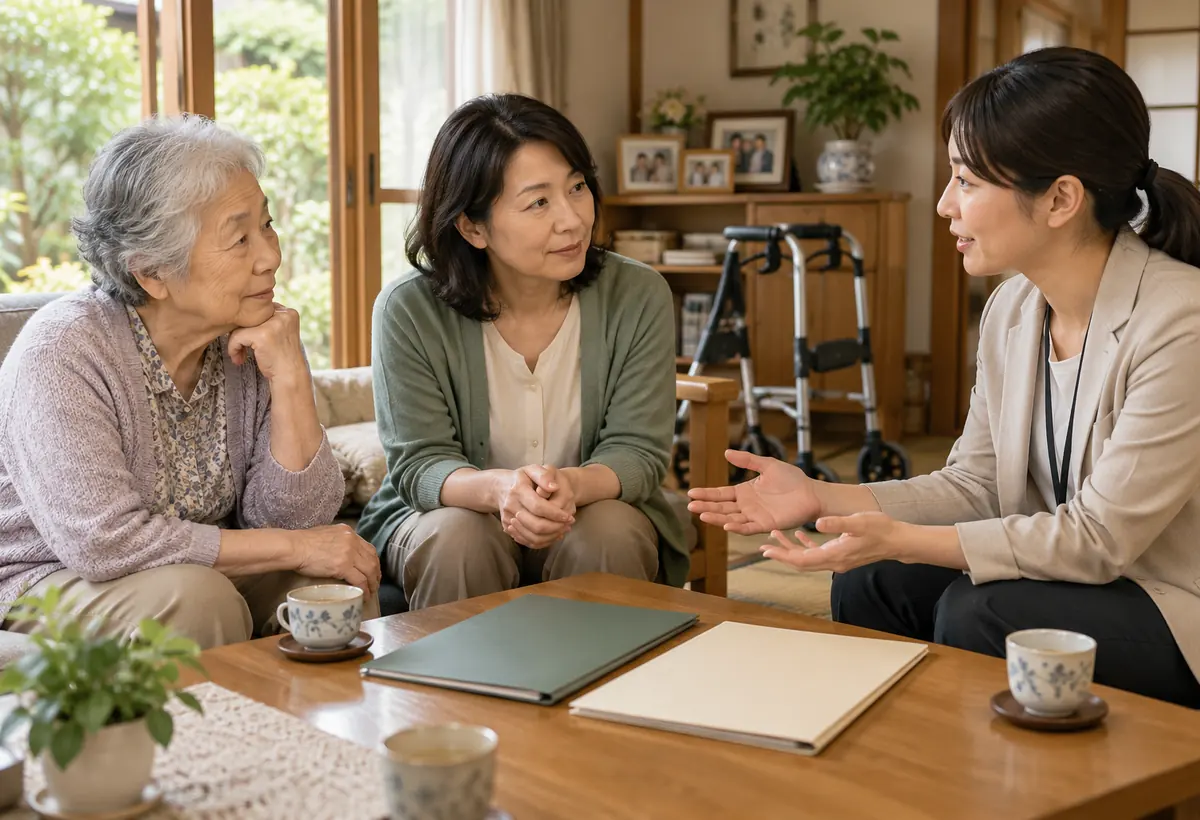
This is a rehabilitation stop, usually after hospital, meant to get a parent home, not a place they live out their days. Stays are time-limited and reviewed, so plan the next step from day one. Families treat it as a permanent bed and are unsettled when discharge looms. Use the stay to arrange home services or a longer-term facility in parallel, and ask staff their expected timeline early.
Purpose of a stay
A geriatric health facility has a doctor on site, nurses and rehabilitation therapists. Its aim is to get the resident home. People usually come after a hospital stay, when they are medically stable but not yet strong enough to manage alone. Care level 1 or above is required.
Whether a resident can go home is reviewed at regular intervals, often every three months. Some residents stay much longer in practice, but families should not plan on a permanent place.
Costs and medicine
The care fee is co-paid at 10% to 30%, plus meals and a room charge. Low-income households can apply for the same meal and room reductions used at special nursing homes.
The national standard room charge at these facilities is ¥1,728 a day for a conventional private room. For a shared room it is ¥437 a day, or ¥697 where the facility charges a room fee.
Routine medicine is included in the facility fee, so the facility may switch prescriptions to drugs it stocks. Ask about this before admission if the parent depends on a specific brand.
Planning the next step
Treat admission day as the start of discharge planning. Ask the support counselor for the expected review dates. In parallel, line up home services, a special nursing home application or private housing.
Many geriatric health facilities also take short stays. A short stay first can show the family how the facility works before a longer admission.
The geriatric health facility article explains admission and length of stay. Nursing homes for foreigners compares the other facility types.
Read more: Rouken geriatric facilities
Related terms
- 特別養護老人ホーム(tokuyou)— special nursing home
- デイケア(day care / tsuusho riha)— day rehabilitation
- 地域連携室(chiiki renkei shitsu)— discharge planning office
Where to go next
This word will come back at the home assessment or in the first care plan. The full Japanese elder care glossary holds 54 terms, and the long-term care insurance guide shows where each one sits in the process.
If you would rather someone handled the Japanese side, our care navigation service does that, and the first consultation is 30 minutes and free. Definitions here are general orientation and rules vary by municipality; see our editorial policy or contact us with your situation.