
Articles
All articles, page 2
Page 2 of 6, 40 articles on this page, newest first. Older articles sit further back; the topic hubs on page 1 are the faster route to one subject.
 Articles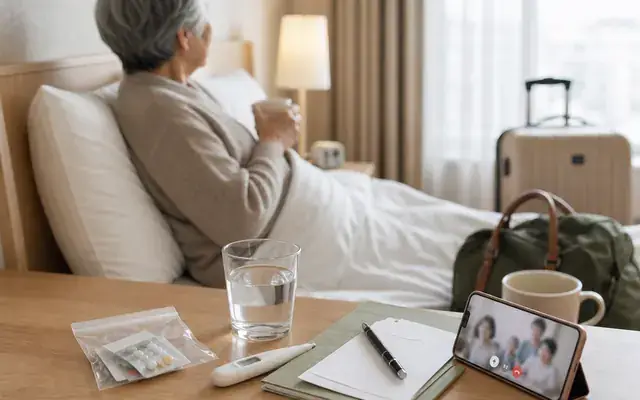
2026-07-05
Flying to Japan with an Elderly Parent: Clearance, Assistance, and Jet Lag
Most families do not need a doctor's clearance form to fly, but a parent using oxygen, a stretcher, or recovering from recent surgery does, and both ANA and JAL want that paperwork in before you reach the airport.
Read article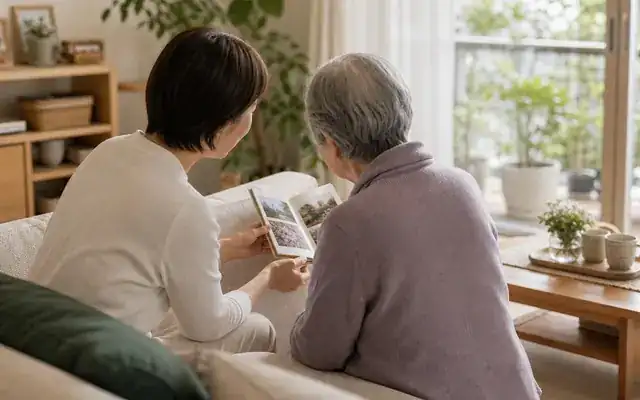
2026-07-05
When a Parent Is Hospitalized in Japan and Family Is Abroad: Laundry, Visits, and Paperwork
Japanese hospitals do not expect family to nurse a patient, but they do expect someone to supply clean clothes, daily items, and a signature; a CS set rental runs roughly ¥390 to ¥600 a day and a paid visitor typically ¥2,500 to ¥3,000 an hour, so overseas families can cover the gap without flying over.
Read article
2026-07-05
How to Read Your Parent's Japanese Care Plan (Kyotaku Plan) in English
A kyotaku service plan is not one document but seven standard forms; Table 2 lists the goals and approved services, Table 6 is the weekly schedule, and Table 7 is the bill your parent actually pays against.
Read article
2026-07-05
When the Money Runs Out at a Japanese Care Home: Options Before and After
A support inquiry letter (fuyo shokai) does not obligate an adult child abroad to match a parent's living standard, only to help within their own means, and several public systems, including an asset test near ¥10 million for a single resident, can lower a facility bill before arrears force a move.
Read article
2026-07-05
A Japanese Care Home Asked Your Parent to Leave: Rights and Next Steps
Most facility-initiated terminations in Japan run on roughly a 90-day notice period, and the grounds are usually one of four things: rising medical need, long hospitalization, unpaid fees, or unmanageable behavior. Families abroad can contest an unclear notice through the kokuho rengo complaint system while lining up the next placement in parallel.
Read article
2026-07-05
Family Proxy Services in Japan: Hiring a Stand-In When You Live Abroad
Some of a parent's Japan errands need nobody's permission, some need a notarized power of attorney and a signature certificate from an embassy, and a few (medical consent, most financial decisions after capacity declines) legally need a guardian instead of a stand-in.
Read article
2026-07-05
Getting a Family Doctor (Kakaritsuke-i) in Japan: The First Thing Retirees Should Set Up
Japan has no GP registration system, so a retiree's "family doctor" is really a neighborhood clinic they choose and return to. Skip that step and a first visit to a large hospital adds a mandatory selective fee of at least ¥7,000.
Read article
2026-07-05
When Both Parents in Japan Need Care: Planning for a Two-Person Household
In Japan, 63.5% of people cared for at home by someone they live with have a caregiver who is also 65 or older (2022 national survey), so if your parents are both aging in place, certification, care limits, and the household cap all run per person, not per couple.
Read article
2026-07-05
Documents to Gather Before You Move Back to Japan: What You Can Only Get Abroad
A handful of documents, your pension contribution history, driving history proof, apostilled marriage records, and recent medical files, are hard or impossible to request once you have already left, so gather them before the flight rather than after.
Read article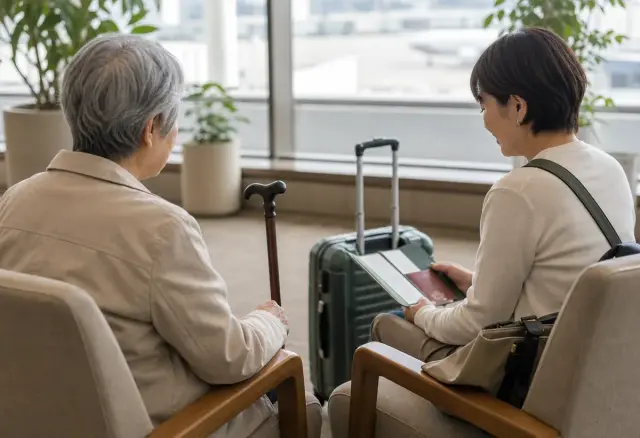
2026-07-05
If a Family Member Dies While Visiting Japan: Procedures and Costs
Japanese law requires at least 24 hours between death and cremation, and a family choosing to bring ashes home instead of the body typically pays roughly ¥300,000 to ¥600,000 in shipping on top of local funeral costs, while a full-body repatriation runs several times higher.
Read article
2026-07-05
Who Keeps an Eye on Your Parent in Japan: Minsei-iin and the Neighborhood Watch Network
Japan already has a free watch network around your parent: a government-appointed minsei-iin welfare commissioner, neighbors, and businesses like the post office and utility meter readers, and it costs nothing to connect to it before you pay for a monitoring device.
Read article
2026-07-05
Moving a Care-Certified Parent to Another City in Japan: The 14-Day Rule for Transferring the Care Level
A care-level certification does not move automatically. Submit the receipt certificate (juyu shikaku shomeisho) to the new city within 14 days of transfer-in and the same care level carries over; miss the window and the parent goes back to a fresh assessment that can take about a month.
Read article
2026-07-05
A Dentist Who Comes to the House: Visiting Dental Care for the Elderly in Japan
Home-visit dental care in Japan is billed through health insurance (around ¥11,000 for the visit fee before coinsurance) plus a separate long-term care insurance guidance fee of roughly ¥5,170 a month, and it is only covered when the clinic is within 16 kilometers of the home.
Read article
2026-07-05
The Hospital "Key Person" in Japan When All Family Lives Abroad
A Japanese hospital's "key person" (キーパーソン) is a role the institution invents at admission, not a legal status, and there is no rule that it has to be filled by someone physically in Japan; the real constraint is whether that person can be reached fast enough and show up when a care conference is called.
Read article
2026-07-05
The Nursing Home Admission Process in Japan: Application to Move-In
Admission runs on two different clocks: a tokuyo (special nursing home) is ranked by a monthly priority-points committee, while most fee-based homes admit on a first-qualified, roughly one-month document-to-move-in timeline. Knowing which clock applies changes what a family abroad should do first.
Read article
2026-07-05
Senior Vaccinations in Japan: Flu, Pneumococcal, and Shingles Subsidies for Foreign Residents
Japan subsidizes flu, pneumococcal, and shingles vaccines for residents 65 and older, cutting the shingles shot from a full self-pay price near ¥40,000 to a copay as low as ¥4,000 in cities like Kawasaki, but new residents have to register for the coupon themselves rather than wait for it to arrive.
Read article
2026-07-05
Starting Care Services Before Certification Finishes in Japan: The Provisional Care Plan and Its Risk
Families can start home care in Japan while a certification application is still pending, using a provisional care plan; the law promises a decision within 30 days, but the national average is around 40 days, and if the final result lands lower than the plan assumed, the difference becomes self-pay.
Read article
2026-07-05
Visiting Japan Again After Decades Away: An Older Traveler's Guide
Trains now run on tap-and-go IC cards instead of ticket windows, 94.2% of higher-traffic stations have step-free routes as of the end of fiscal 2024, and cashless payment covers 58.0% of consumer spending as of 2025, so the Japan you remember is still recognizable but the daily mechanics have moved on without you.
Read article
2026-07-05
Move-In Day at a Japanese Care Facility: What to Bring, Sign, and Register
Move-in day itself takes an afternoon, but the paperwork that protects your parent's insurance, the jusho-chi tokurei filing that keeps their home municipality as insurer, has a window of roughly two weeks and nobody at the facility will chase you to file it.
Read article
2026-07-05
Chonaikai, Community Salons, and Classes: Building a Local Network as a Foreign Retiree in Japan
A chonaikai membership usually runs about ¥200 to ¥2,000 a month and is voluntary, while a kayoi no ba session or a kominkan class can cost as little as ¥0 to ¥1,000 a term, and each is a different entry point into the same local safety net you will need later.
Read article
2026-07-05
When a Parent in Japan Can't Manage Their Pills: Medication Support at Home
A pharmacist's home visit (kyotaku ryouyou kanri shidou) under long-term care insurance typically runs about ¥1,000 to ¥2,000 a month at 1-wari copayment, and a home helper can hand over pre-sorted pills but cannot decide dosage or manage side effects.
Read article
2026-07-05
Retiring to the Family Home in Japan: Reoccupying the Jikka After Decades Abroad
Before you move into your parents' old house, four things decide whether it works: is the registration in your name, can a 70s body use the layout, will the local clinic reach you, and does ¥200,000 in Long-Term Care Insurance renovation cover actually solve it.
Read article
2026-07-05
Spotting Decline in a Parent in Japan Over Phone and Video Calls
A parent who says "I'm fine" on every call can still be declining. Repetition within one call, a newspaper pile the neighbor mentions, or a missed utility payment are each a stronger signal than tone of voice, and each points to a different next step, from calling the local community support center to booking a flight.
Read article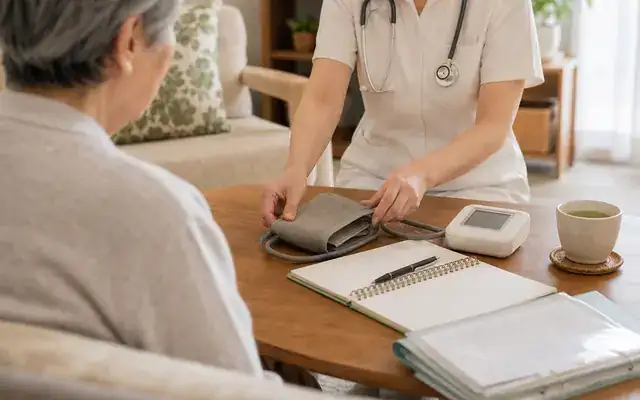
2026-07-05
When a Parent in Japan Can't Do the Shopping: Net Supers, Co-ops and Errand Services
A parent who has stopped driving or can no longer carry bags has four realistic ways to keep the fridge stocked in Japan: an insured helper's limited shopping errand, a co-op's weekly kohai delivery, a net supermarket, or a paid daiko service, and only some of them let a child overseas set up and pay for the contract.
Read article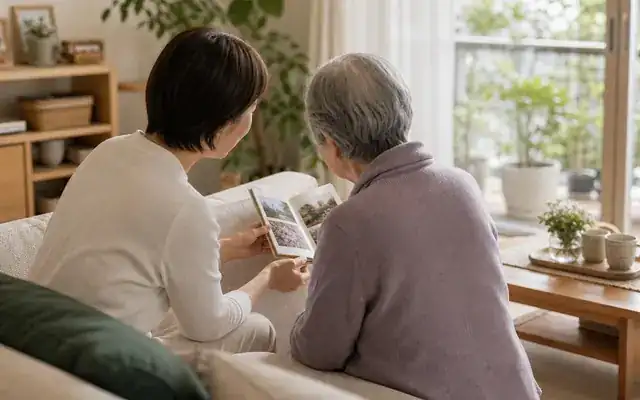
2026-07-05
Managing a Parent's Empty House in Japan From Overseas
Once a parent moves into a care facility, an empty house left unmanaged in Japan can be reclassified as a "kanri fuzen akiya" and lose the property tax discount on up to 200 square meters of land, a change that can push the land's tax bill toward six times its previous amount.
Read article
2026-07-05
Paying a Parent's Care Bills in Japan From Overseas: What Works
Most overseas families settle a parent's care bills through a combination of a Japanese bank account with automatic transfer set up in advance, a registered proxy card, and an international remittance service, because a single international wire can trigger identity checks once it passes 100,000 yen and stall for days.
Read article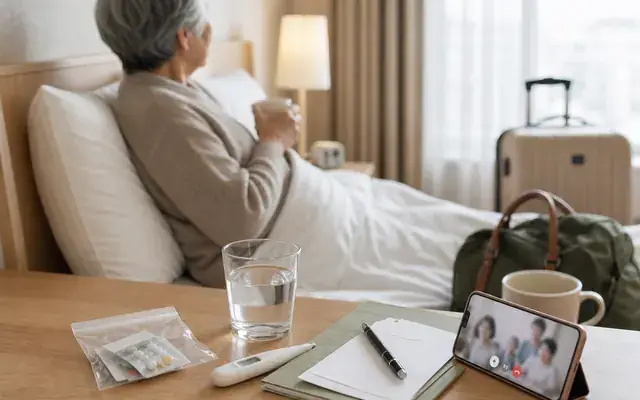
2026-07-05
Travel Helpers in Japan: Paid Care Companions for an Older Visitor
A certified Travel Helper, an off-insurance outing escort, or a kaigo taxi (fares from about ¥800 plus ¥500 to ¥2,000 in assist fees) can cover a few hours or a full day of hands-on help during a Japan visit, and none of them require Japanese residency or a care-insurance certificate to book.
Read article
2026-07-05
Unpaid Long-Term Care Premiums in Japan: The 3x Co-Payment Penalty and How to Fix Arrears
Fall a year behind on Japan's long-term care insurance premiums and the co-payment on services rises; after two years, unpaid amounts become legally uncollectable but the co-payment stays permanently raised to 30 or 40 percent, with no refund cap protection.
Read article
2026-07-05
The Disability Tax Certificate for a Care-Certified Parent in Japan: A Deduction Most Families Miss
A care-certified parent without a disability handbook can still qualify for a ¥270,000 to ¥750,000 income tax deduction in Japan, but only after the city issues a separate 障害者控除対象者認定書, since long-term care certification alone does not trigger it.
Read article
2026-07-05
Caring for a Family Grave in Japan From Overseas: Visits by Proxy and Hakajimai
A family grave in Japan needs an annual management fee of roughly ¥5,000 to ¥20,000 paid every year or it can be reclassified as an abandoned grave and removed after a one-year public notice; families abroad usually choose between a proxy visiting service, switching to a perpetual-memorial plot, or a formal hakajimai closure with a reburial permit.
Read article
2026-07-05
Japan's Free Kaigo Yobo Programs: Municipal Fitness and Frailty Classes Foreign Seniors Can Join
Municipal kaigo yobo programs in Japan are open to any resident 65 and older, foreign nationals included, and most general classes are free or cost a few hundred yen; the entry point is a 25-item basic checklist at the local community general support center, not a long-term care insurance application.
Read article
2026-07-05
Moving a Parent to a Care Facility in Another City in Japan: The Yobiyose Playbook
When a parent moves cities to enter a facility near family, two rules decide what happens next: the care-need certification only carries over if the new municipality receives it within 14 days, and which city ends up as the insurer depends on the facility type, not on where the parent used to live.
Read article
2026-07-05
UR Housing for Older Returnees: Renting in Japan with No Guarantor and No Japanese Income
UR Urban Renaissance housing accepts applicants with no personal guarantor and no Japanese salary if savings reach 100 times the monthly rent, or if you are 60 or older and a supporting relative meets the standard instead.
Read article
2026-07-05
Why Your Parent Pays 1, 2, or 3 Wari: How Japan Sets the Care Co-Payment Rate
Japan sets a parent's long-term care co-payment at 10%, 20%, or 30% using two income tests re-checked every August 1, not on how much care they actually need.
Read article
2026-07-05
Eating Out in Japan with an Elderly Parent: Soft Meals and Restrictions
A parent who chews or swallows less well, watches salt or sugar, or carries a food allergy can still eat out across most of Japan; the fix is knowing which restaurant genres bend easily, the handful of Japanese phrases that get a kitchen to adjust a dish, and Japan's own care-food labeling (blue, yellow, and red Smile Care Food marks) that make packaged backup food easy to identify.
Read article
2026-07-05
Build an Emergency Plan for Your Parent in Japan Before You Need It
A workable emergency plan for a parent in Japan fits on one page: a municipal medical-information kit in the fridge, three phone numbers, the location of the health insurance card and My Number card, and a written answer to who flies if a call comes at 2am. Build it now, while nothing is wrong.
Read article
2026-07-05
Housekeeping Help for an Elderly Parent in Japan: What Insurance Covers and What You Hire Privately
Japan's insured home helper can only clean and tidy your parent's own space, not the whole house; a Silver Human Resource Center (roughly ¥800–¥1,300/hour) or a private housekeeping service (roughly ¥3,000–¥4,000/hour) fills the rest.
Read article
2026-07-05
Reading a Japanese Care Home Contract Before You Sign: The Clauses That Matter
Five clauses decide what happens to your parent and your money later: discharge conditions, fee revision, entrance-fee refund, added costs, and cancellation. Japan's jūyō jikō setsumeisho (重要事項説明書) is legally required to spell out all five before you sign.
Read article
2026-07-05
Mental Health Support in English for Seniors in Japan
TELL's English-language Lifeline (0800-300-8355) is free, anonymous, and open to anyone in Japan, and National Health Insurance covers 70% of an English-speaking psychiatrist's fee, dropping the household share to 10% for ongoing treatment under jiritsu shien iryo, while English talk therapy itself is self-pay, usually ¥20,000 to ¥24,200 a session.
Read article
2026-07-05
Inheritance and Gift Tax When You Move Back to Japan: What Changes the Day You Land
The day you re-establish a Japan address (jūsho), you generally become an unlimited taxpayer again, meaning your worldwide assets, not just what is in Japan, fall inside the inheritance and gift tax net.
Read article